In our previous articles, we've talked about how the cost of burnout is a real expense and how you can calculate the Value at Risk for your team. The next logical step is to flip the perspective. Instead of asking "how much is this costing us?", let's start asking: "What is the potential gain if I solve the problem?".
This is the difference between absorbing a cost and making an investment.
Talking about ROI (Return on Investment) when it comes to people might seem cold, but it's actually the most respectful approach there is. It means treating well-being not as an incidental expense, but as a fundamental strategic activity for the health of the business, with a measurable economic return.
In this guide, let's build a simple business case for your team together.
From Cost to Gain: Your Potential ROI
For consistency, let's use the same example from previous articles: a team of 15 people with an average salary of €35,000. We calculated a "Value at Risk" of over €80,000 per year. Now let's see how to turn that into a gain.
1. Gain from Reduced Turnover
We estimated a cost of €63,000 for losing two people. What if, by improving the team climate, you could prevent even one of those resignations? Gallup's research shows that high engagement can reduce turnover by up to 40%. In our example, even just saving one position means an immediate gain of over €31,500 that stays in the company's coffers instead of being spent to replace a talent.
2. Gain from Increased Productivity
We calculated a loss of nearly €19,000 due to 3 "checked-out" employees. But the real gain isn't just recovering that loss. Companies with the most engaged teams see a productivity increase of up to 25%. This means those 3 people not only get back to performing at 100% of their potential but also contribute to greater overall efficiency. The gain here is both qualitative and quantitative: more projects completed, faster, and with higher quality.
3. Gain from Reduced Absenteeism
A disengaged team has absenteeism rates 37% higher. Fewer absences don't just mean "more hours worked." It means more continuity on projects, less sudden workload on the rest of the team, and smoother operations. The gain is in stability, predictability, and operational peace of mind for everyone.
The Smartest Investment Is in Time
Seeing these numbers makes it clear that investing in team well-being isn't "one more thing to do," but one of the most powerful financial levers available to a manager.
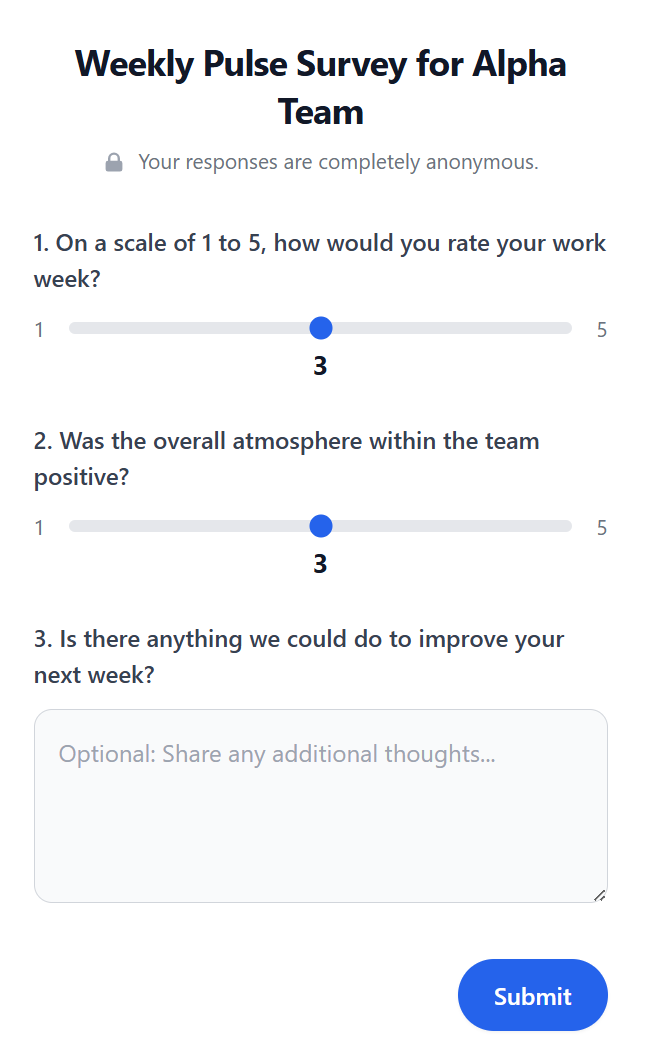
The required investment isn't hiring a full-time consultant or launching complex HR programs that take months to implement. The most effective investment is to start listening systematically, to get a pulse on the situation and act with small, continuous corrections.
Ready to invest in your most important asset?
Sentialytics is the tool that turns listening into a strategic action with a measurable ROI. Start building a stronger team and a healthier business.
Start Now