Of all the qualities a team can have—competence, experience, creativity—there is one invisible quality that holds them all together: trust.
You can think of trust as your team's operating system. If it runs well, everything is smoother, faster, and more efficient. If it's unstable or corrupt, even the best applications (your most talented people) start to crash, malfunction, or conflict with each other. Without trust, even the most brilliant team is just a group of people working in the same room. With trust, it becomes a real team.
Many managers think that trust is something people "must" give by virtue of their role. The truth is that trust isn't requested, it's built. It is the consequence of concrete actions, day after day. Let's see how.
1. Vulnerability (Yes, You Read That Right)
A leader who admits they don't have all the answers, who asks for help, or who says "I was wrong about this," doesn't appear weak, but human. And people trust human beings, not perfect statues. Showing vulnerability creates psychological safety: if the boss can admit a mistake, then I can too without fear of being judged. How to do it: The next time you're uncertain about a decision, try saying to the team: "Honestly, I'm not 100% sure which is the best way forward. What's your point of view?".
2. Consistency: Your Actions Speak Louder Than Your Words
Trust is eroded by small inconsistencies. If you say work-life balance is important but then send emails at 10 PM, the message that gets through is that your words are not reliable. If you say you want honest feedback but then react defensively, people will stop giving it to you. How to do it: Do a small audit of your habits. Are your daily actions aligned with the values you preach? Be the first to respect the rules and principles you have established for the team.
3. Give Trust to Get Trust (Real Delegation)
Delegating a task but controlling every single step is not delegation; it's just another way of micro-managing. Real delegation is an act of trust: I entrust you with the goal, and I trust that you will find the best way to achieve it, even if it's different from my way. This approach not only frees up your time but also sends the most powerful message to your team: "I trust you." How to do it: When you delegate, focus the conversation on the final goal ("the what and the why"), not on the intermediate steps ("the how"). Schedule a time for a check-in, but resist the temptation to ask for constant updates in between.
4. Genuine Listening (The Foundation of Everything)
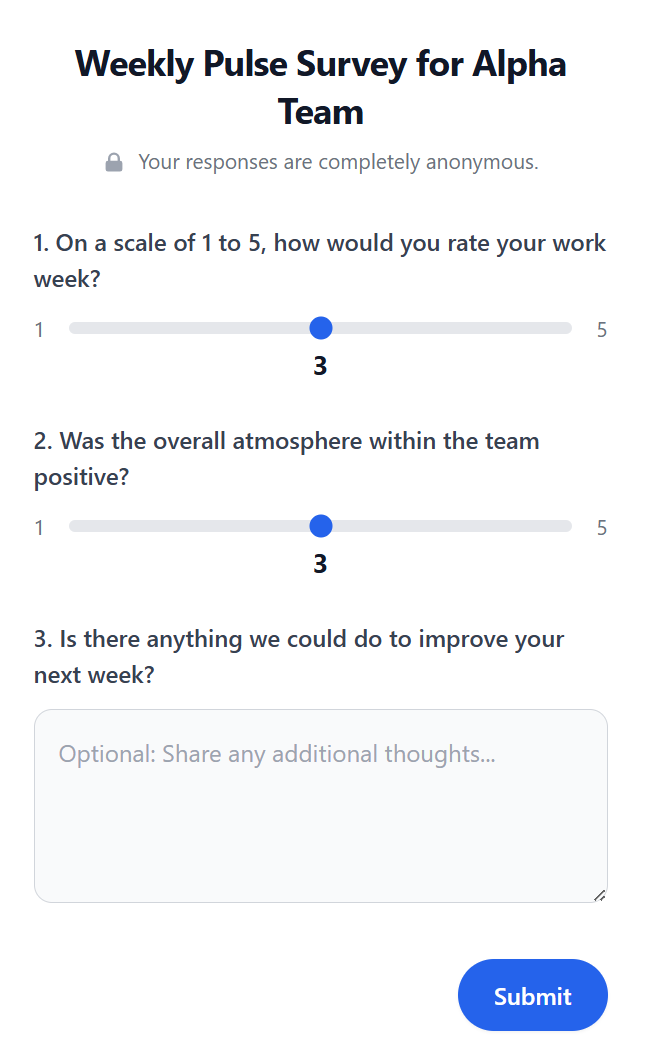
People give their best when they feel respected and listened to. As an experienced project manager once said, "when treated with respect and interest, I have never met a person who did not want to give their best." Listening isn't waiting for your turn to speak; it's an active effort to truly understand the other person's point of view, their difficulties, and their ideas. To do this, however, you need a channel. A systematic way to ask "how are you?" and "what do you think?" that is perceived as safe and honest.
Ready to build your "trust capital"?
Trust is built through consistent and safe listening. Sentialytics provides the anonymous channel to start this dialogue, understand your team's real needs, and become the leader they can trust.
Start Now