Being a manager in an SME is a balancing act. On one hand, you have to deliver results, meet deadlines, and watch the bottom line. On the other, you care about your people and want them to work in a positive, motivating environment.
The million-dollar question is always the same: how do you push for productivity without "squeezing" the team to the point of burnout?
The answer, often, doesn't lie in new complicated software or rigid methodologies imported from large corporations. It lies in removing the obstacles, large and small, that slow down workflow and generate frustration. True productivity isn't working more; it's working better, with less friction.
Here are 5 practical strategies, designed for the SME context, to achieve this.
1. Crystal Clear Goals (The "Why")
Often, in our haste, we assign tasks. "Do this," "Prepare that report." But when people know not only what to do, but why they are doing it, their autonomy and motivation grow exponentially. A clear, shared goal is the compass that allows everyone to row in the same direction, even without constant supervision. How to do it: The next time you assign a task, add one sentence: "This is important because it will help us achieve [goal X]."
2. The Superpower of Feedback (Given and Received)
In SMEs, where everything moves fast, the risk of misalignment is extremely high. Feedback isn't a year-end report card; it's the GPS that recalculates the route in real-time. A flow of honest, constant feedback prevents costly mistakes, rework, and, most importantly, misunderstandings that can erode trust. How to do it: Create informal moments for feedback, even just 10 minutes at the end of the week. And, even more importantly, ask for it for yourself. A simple "How can I better support you?" is the most powerful question a manager can ask.
3. Recognize Progress, Not Just Milestones
Waiting for a project launch to give praise is like watering a plant only after it has bloomed. Recognizing small steps and daily efforts keeps energy high and makes people feel seen and appreciated. It's the fuel for motivation. How to do it: You don't need a budget. A "Great job on that presentation" said publicly on Slack or at the beginning of a meeting has enormous value. Celebrate the effort, not just the final result.
4. Protect Time for Deep Work
Constant interruptions are the number one productivity killer. A single hour of focused work ("deep work") is worth more than three hours spent jumping between emails, chats, and calls. In an SME, where everyone wears multiple hats, protecting these moments is crucial. How to do it: Establish "silent hours" where interruptions are discouraged. Encourage the use of statuses that communicate "do not disturb." As a manager, your role is to be a shield for your team, not another source of distraction.
5. Listen to the "Weak Signals"
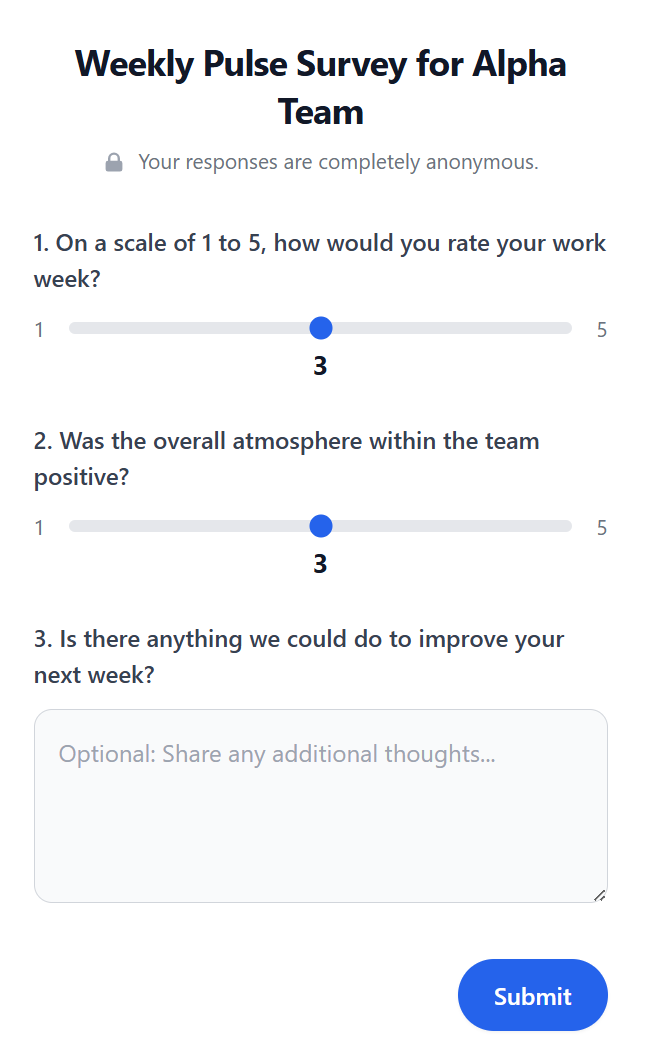
Big productivity problems – delayed projects, unhappy clients, conflicts – rarely appear out of nowhere. They are almost always the result of small, accumulating frustrations: an inefficient process, an unbalanced workload, a piece of software that doesn't work. Listening to these "weak signals" is the most effective way to prevent problems before they explode. This, more than anything else, is the duty of a leader.
Want to stop guessing?
Sentialytics is the listening system that helps you catch the weak signals and identify productivity roadblocks before they become problems. Start removing friction and unlocking your team's true potential.
Start Now